Produced by Scott Litt, Incubus' second full-length album, Make Yourself, makes a bid for broader mainstream success while keeping the group rooted in a hybrid of familiar late '90s alt-metal (i.e., roaring guitars, white-noise sonic textures, and an undercurrent of electronics) and Chili Pepper funk-rock. Where S.C.I.E.N.C.E. sometimes veered abruptly between the two genres without really fusing them, Make Yourself finds the band settling more comfortably into its sound, and once again, there are a few really good singles. Once again, too, there are still a few awkward moments and underwritten songs, but overall, the album should definitely please fans.
Marc Bianchi has long been self-conscious about his vocals. In fact, on The Young Machines he even brings it to listeners' attention. "Like that kid who asked me if I knew I couldn't sing/That's like asking a blind man if he knows that he can't see," he sobs on "Meet the Pressure." It's not as bad as he thinks, though his soft vocals may still need some fine-tuning. And boy, does he grieve over girlfriends in "Girl Problem" and "My Girlfriend's Boyfriend." Bianchi may be as gloomy as ever, but after moving from California to Texas and from Tiger Style to Mush Records, Her Space Holiday maintains its lush IDM-powered indie pop. The synthetic string arrangements, most notably on "Sleepy California," supply heartfelt bliss, as Bianchi's classical music influence is fully explored. "Tech Romance" joins lovely violins with hip-hop beats, further developing Bianchi's production skills. "The Luxury of Loneliness" is gracefully ambient, but with dismal confessions such as "I'm losing all my friends," someone should keep an eye on this guy.
Anyone who thought The Maccabees were a one-trick pony of high-energy pop-punk definitely haven't heard new single Toothpaste Kisses; the slow-paced, darker angle of the band which also acted as the closing few minutes on their debut album Colour It In. Re-released as a single after what literally feels like just a few days since the original single came out (October no less), the song has been snapped-up by Samsung for their new G800 phone adverts, which may explain why this track will sound so familiar to you. There's no sniff of the high-energy guitars and demanding bass you'd expect from the lads, instead we hear a simple, rustic acoustic number, that's hastily recorded in a sketchy way - almost like it's a solo singer-songwriter performing in a smokey pub somewhere to a handful of onlookers. There's the occasional whistling and slide guitar, sounding at times, like The Coral only not...crap. This is a quite sweet, thoughtful and a more sensitive side I'm sure a lot of people would love to see The Maccbees tackling in future.
Last time around, Conor Oberst -- who for all intents and purposes, is Bright Eyes -- shoved all of his interests into one long, overstuffed epic, but with the simultaneously I'm Wide Awake, It's Morning and Digital Ash in a Digital Urn, he separates the country-rock on the former and the messy modernistic indie rock on the latter, as if to counter the criticisms that he can't focus. I'm Wide Awake is designed as a nakedly honest singer/songwriter album, somewhat inspired by the classics of the genre in the '70s -- he even recruits Emmylou Harris for some harmonies, hoping that some of the Gram Parsons' magic will rub off. Stripped of the careening, dramatic, arrangements of Lifted, Oberst's music seems simpler, and while his voice -- a quavering bleat that's halfway between Feargal Sharkey and the Dead Milkmen's Rodney Anonymous -- is an acquired taste; fans will find this to be his most direct album yet.
As the popularity of emo and punk-pop plateaued, many bands had a lot to prove to stay in the game. As of 2003, Brand New had sidestepped any notion that they'd be stuck in the prototypical mold found on Your Favorite Weapon. Unlike their debut, Deja Entendu isn't all about bitter breakups and doesn't fall into a permanent punk-pop hole. Produced by Steven Haigler (Pixies, Quicksand), this sophomore effort finds Brand New maturing, reaching for textures and song structures instead of clichés. They still, however, alternate their full-on blasts with slower acoustic work, which doesn't hurt. Many antiromantic lyrics such as "my tongue is the only muscle on my body that works harder than my heart" saturate the disc, but there's still some resentment with downers such as "I hope you come down with something they can't diagnose and don't have a cure for." "The Quiet Things That No One Ever Knows" is one of the stronger tracks and isn't so much a fresh entry as it is a rewrite of their semihit "Jude Law and a Semester Abroad." It's not quite déjà vu; it's just consistent.
There was a period of time when singsongy punk-pop and emo were two separate styles -- especially when each initially gained popularity in the late '90s. But sometime during the early 21st century, both styles collided together for many new groups -- case in point, Four Year Strong. Hailing from Worcester, MA, this quintet (comprised of two singer/guitarists -- Alan Day and Dan O'Conner -- plus bassist Joe Weiss, synth twiddler Josh Lyford, and drummer Jake Massucco) never met a tuneful melody it didn't like, as evidenced throughout its full-length debut, 2007's Rise or Die Trying. It would be understandable if the band were quickly labeled as "tricky yet sticky-sweet punk-pop" given its affinity for anthemic choruses and abrupt music shifts -- but there are a few surprises lurking around the corner. Cases in point, "Prepare to Be Digitally Manipulated" packs a surprise hardcore left hook midway through, and "Abandon Ship or Abandon All Hope" features some subtle Rentals-esque synth maneuvers. It was only a matter of time until punk-pop swerved into other styles, and Four Year Strong's Rise or Die Trying signals this shift.
Such Great Heights is a single by Sub Pop electro-poppers Postal Service with a great idea behind it. Listeners get the best song from the full-length record, "Such Great Heights"; a strong non-album track, "There's Never Enough Time"; and two bands playing covers of Postal Service songs. The Shins sparkle on their version of "We Will Become Silhouettes" and Iron and Wine plays a positively stunning rendition of "Such Great Heights." Both bands strip away Postal Service's new wave electronics and play the songs straight, the Shins with their typical ramshackle verve and Iron and Wine with Sam Beam's haunting vocals and British folk-style guitars. A worthy purchase for fans of the three bands and for all indie kids.
"The District Sleeps Alone" is one of the moodiest highlights of the Postal Service's moody 2003 album Give Up. The track features deeply sad vocals by Ben Gibbard and some inspired musical backing full of tripping strings, sweeping female harmony vocals, and skittery beats provided by Jimmy Tamborello. The two remixes of the track on the single don't improve upon the original much but are interesting: DJ Downfall's "Persistent Beat" mix adds a persistent beat, some fluttery sequencers, and a jolt of energy while John Tejada's mix adds a housey beat and some slide guitar. Both mixes keep the vocals intact. The fourth song is an imaginative and subdued take on the Flaming Lips' "Suddenly Everything Has Changed."
1 Fading Out 2 Day in Day Out 3 Lose It All 4 Invisible Touch 5 Postcards Home
--------------------------------
This band was the first show I ever went to. They were based out of Orlando, and it sucks that they never got bigger before they broke up. I sorta feel like the South Florida music scene started going downhill right when they broke up.
1 Holding Someone's Hair Back 2 Act Appalled 3 Wish Resign 4 TheGlorious Nosebleed 5 In Fear and Faith 6 TheGreat Golden Baby 7 Stop the Car 8 We're All Thieves 9 Oh, Hello 10 Always Getting What You Want 11 Meet Me in Montauk
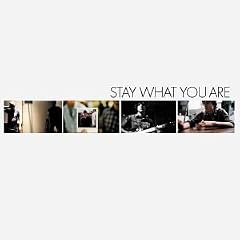
Punk rock finally smiled during the late '90s and into the millennium thanks to the bands like New Found Glory, Sum 41, and countless TRL mainstays, and New Jersey's own Saves the Day play with their post-punk stylings on their third album, Stay What You Are. More mature compared to 1999's Through Being Cool, Stay What You Are mixes emocore delight with post-grunge snarl, and Saves the Day's harmonies are jaunty and tight. But the album is also quite dark and grim; they stay close to the anger found in punk in the first place. Album opener "At Your Funeral" pauses at the idea of death of a peer. Frontman Chris Conley's boyish vocals project a façade of sweet, bouncy sounds, practically glossy and sheer. The bleak descriptions found on "Jukebox Breakdown" and "Nightingale" capture the grittiest three-chord riffs and Saves the Day's highest artistic moment yet. They're bittersweet from love, and self-discovery is most pertinent. They want to avoid such loss, and "All I'm Losing Is Me" suggests that. Saves the Day is conscious of what's affecting their generation, post Generation-X, and they're asking thousands of questions. Stay What You Are yearns to fight the compromise within social standards and complies with bit of self-indulgence.
Early 2006 and five like minded souls in Portsmouth U.K. gather together to form what will henceforth be known as THE STRANGE DEATH OF LIBERAL ENGLAND. With a cumulative desire to make music that explores light and shade, beauty and ugliness, creation and destruction, the band take their cue from the Constellation Label, the more creative end of the current UK music scene and the ethos of pushing in all directions musically within the same set. The band also take the interesting decision to share roles and not communicate verbally with the audience. This leads members switching instruments between songs and use slogan placards to highlight song titles and transmit messages to those watching.
1 Frank Sinatra 2 TheDistance 3 Friend Is a Four Letter Word 4 Open Book 5 Daria 6 Race Car Ya-Yas 7 I Will Survive 8 Stickshifts and Safetybelts 9 Perhaps, Perhaps, Perhaps 10 It's Coming Down 11 Nugget 12 She'll Come Back to Me 13 Italian Leather Sofa 14 Sad Songs and Waltzes
When Montreal's Arcade Fire released Funeral in 2004, it received the kind of critical and commercial acclaim that most bands spend their entire careers trying to attain. Within a year the group was headlining major festivals and sharing the stage with U2 and New York City's "two Davids" (Bowie and Byrne), all the while amassing a devoted following that descended upon shows like sinners at a tent revival, engaging in the kind of artist appreciation that can easily turn to a false sense of ownership. On their alternately wrecked and defiant follow-up, Neon Bible, one can sense a bit of a Wall being erected (Win Butler's Roger Waters/Bruce Springsteen/Garrison Keillor-style vocal delivery notwithstanding) around the group. If Funeral was the goodbye kiss on the coffin of youth, then Bible is the bitter pint (or pints) after a long day's work. The brooding opener, "Black Mirror," with its sinister "Suffragette City"-inspired groove and murky refrain of "Mirror, Mirror on the wall/Show me where them bombs will fall," sets an immediate world-weary tone that permeates that majority of Neon Bible's Technicolor pages. As expected, those sentiments are amplified with all of the majestic and overwrought power that has divided listeners since the group's ascension to indie rock royalty, but despite a tendency toward midtempo balladry and post-fame cynicism, they're anything but dull. It's the triumphant orchestral remake of live staple "No Cars Go" and the infectious "Keep the Car Running" -- the latter sounds like a 21st century update of John Cafferty & the Beaver Brown Band's "On the Dark Side" -- that will most appeal to Funeral fans, and when the bottom drops out a minute and a half into the pipe organ-led "Intervention" and Butler wails "Who's gonna reset the bone," it's hard not get caught up in all of the dystopian fervor. "Black Wave/Bad Vibrations" and "The Well and the Lighthouse" continue the band's explorations into progressive song structures and lush mini-suites, the thunder-filled "Ocean of Noise" is reminiscent of Bossanova-era Pixies, and the stark (at first) closer "My Body Is a Cage" straddles the sawhorse of earnest desperation and classic rock & roll self-absorption so effortlessly that it demands to be either turned off or all the way up. Neon Bible takes a few spins to digest properly, and like all rich foods (orchestra, harps, and gospel choirs abound), it's as decadent as it is tasty -- theatricality has never been a practice that the collective has shied away from -- but there's no denying the Arcade Fire's singular vision, even when it blurs a little.
On the Good Life's 2004 Lovers Need Lawyers EP the band pares down its sound and comes across as a tough post-punk band rather than dramatic '80s synth pop revivalists. The electronic textures and careful arrangements are mostly gone, singer and bandleaderTim Kasher no longer sounds like he is channeling Robert Smith of the Cure, and the general level of despair and theater is dialed down considerably. Listeners who loved the broken, baroque drama of the first two albums may feel let down, but they shouldn't really because the songs are just as good and the arrangements are still a cut above the usual indie rock band. Kasher seems to have replaced his melancholy with a good old dose of anger that bleeds through in "Entertainer," a bitter, self-lacerating sideswipe at being a musician, the bitter divorce song "Lovers Need Lawyers," and the bitter farewell song "Leaving Omaha." Elsewhere he opens up the sound in a way that the intimate nature of the band's sound would have precluded. On the sweeping epic "For the Love of the Song," the angular, conversational "Friction!," and the bubbly "Always a Bridesmaid," apart from Kasher's vocal it sounds like a different band entirely. In a good way. Lovers Need Lawyers is a promising step forward that puts the band on the same trail to greatness as Spoon and the Anniversary. Hopefully they make it.
On The Meaning of 8, gears are switched from the distorted hip-hop pop of the last Enon-flavored, Advice from the Happy Hippopotamus to a less scatterbrained, more glossy indie-rock album. While it may be a tad disappointing to have Craig Minowa downshift from his expertise of mishmashing styles, it's remarkable to hear how capable he is at creating songs in this specific genre. In fact, the start of the album feels driven by a musical chameleon totally intent on replicating the tunes of his peers (most blatantly Modest Mouse, Arcade Fire, the Flaming Lips, and the Polyphonic Spree.) Despite a more formulaic style and a reduced amount of experimental whimsy than before, the majority of these songs succeed. Where songs bubbled and blipped before, now they puff, bulge, and explode. The pieces are lush and well crafted, and often, as a songsmith, Minowa achieves a more poignant result than his immediate influences. The lovely and ripe-for-spring-fever single, "Chemicals Collide," features a Montreal indie-rock chamber pop formula that focuses on the build -- a guitar part slowly propels from finger-picking into a militant strumming over orchestral swells until the bottom drops out and then returns with a grandiose tom-fueled chorus. This new structure works especially well on the three songs that are the most somber and epic: "Hope," "Thanks" and "Dance of the Dead." They build skyward from lullabies to fourth-quarter supreme climaxes and contain the album's most heartbreaking and finest moments; especially upon realization that the conceptual overtones, saturated with philosophy and mortality, are inspired by Minowa's loss of his son. At the album's weakest moments, bits feel half-finished and almost like afterthoughts with a scattering of minimal instrumental jams and the whinier "2X2x2" and "A Good God" obstructing the view of an otherwise inspired and unusually focused vision. In most cases, the melodies are powerful, painful, and embellished with a potpourri of headphone candy -- xylophone, glockenspiel, piano, music box, vibes, and cello, combined with a variety of distorted synths, guitars, basses, and Bonham-esque drums. Ultimately, the shining moments outweigh the weaker ones (despite the exceptionally long running time), and, when Minowa hits his mark somewhere between the direct homage and the overly abstract, the results are sublime and engaging.
Minnesota's Cloud Cult may use Odelay as a touchstone on Advice from the Happy Hippopotamus but the outfit's experimental beats and hip-hop junk are far more out there than that influence could ever be. Lyrically and vocally removed from the Beck Hansen school of thought, the group evokes strains of the Polyphonic Spree and the Flaming Lips, while brainchild Craig Minowa comes down heavy in terms of topics. The engaging, experimental "Living on the Outside of Your Skin" makes effective use of toy pianos and handclaps to keep listeners on their toes, and Cloud Cult's environmentally astute stance is evident in tracks like "Moving to Canada" -- which pays homage to minimalist groups like the Black Keys with inexplicable skill. From the acoustic-techno shuffle of "Start New" to the pulsating, warped pop of "Happy Hippo," this cult can't help but leave a strong impression. When the latter nicks a hook from Neil Young's "My My, Hey Hey (Out of the Blue)," it puts Minowa's wide musical scope, which varies from folk to funk to punk to electronica (sometimes in the same song), on display for all comers.
Burst and Bloom is a five-song EP of patented Cursive indie rock, but with a new feature. They now have a cellist. Much of the cello playing isn't integral to the structure of the tunes, yet when it is audible, it seems to go along with the music very well. Another point of note is that this release doesn't seem to have quite the heaviness that Domestica had, nor does it have the dynamics that Storms of Early Summer or their split with Silver Scooter showcased. So, what is Burst and Bloom like exactly? Well, it seems to be a little more technical -- more intricate guitar work, layered nicely with the cello in some cases. A little speedier with the tempo and much steadier in their delivery. None of this is to say that Cursive wasn't those things in previous efforts, it's just that's what sticks out the most. Burst and Bloom is another lyrical catharsis for Tim Kasher, a delivery of his melancholy, yet not in such a pungent manner. The emotional dishevelment is more subtler and perhaps only longtime fans will grasp the difference. New fans will appreciate a concise yet wonderful introduction to this Omaha, NE, five-piece.
With more rock and less whine, Cursive provides an exclamation point to the emo scene with Domestica, their third release. Led by vocalists Tim Kasher and former Lullaby for the Working Class frontman Ted Stevens, Domestica explores Kasher's messy divorce through a series of clever but transparent metaphors. Domestica is a concept album harping on the ugliness and beauty of love, a treatise on the pains of divorce and romance. While the themes are nothing new, they are executed inventively. Half the songs don't even contain a chorus, replacing the classic song structure with a string of middle eights held together by the exceptional rhythm section. Despite the instrumental prowess, the true standout on this record is Kasher. His throaty voice propels the album's most satiating cut, "A Red So Deep," from a dissonant clang to an effortless whisper. From the hard rock of the D.C. scene ("The Martyr," "The Radiator Hums") to the classic Pavement sound ("Making Friends and Acquaintances"), Cursive proves they are more than the typical emo band. Kasher's marital troubles transform the selections on Domestica from mere calls for help to anthems of rejection.
-Yancey Strickler, All Music Guide
--------------------------
For our 50th album posted I chose this one. Its been one of my favorite albums since I was like 13.
This is a prime example of how indie pop should be done. ¡All-Time Quarterback! take this minimal style of quirky pop that reflects heavily on the Beatles' Revolver era with a light backing of digital percussions brought on by a Casio synthesizer. And if they don't sound bouncy and happy, they sound mellow and emotional, most notably on "Send Packing" and a cover of Magnetic Fields' "Why I Cry" (female vocals and all on the latter).
When Omar Rodriguez-Lopez and Cedric Bixler-Zavala silenced At the Drive-In in the midst of its popular emergence, there was no question that the two artists would return with new music as exciting as their previous band. However, there was plenty of discussion in corners and over drinks about what, exactly, that music would sound like. It was clear that much more was happening under those Afros than biting, post-hardcore anthemics laced with psychedelia. In 2002, Rodriguez-Lopez and Bixler-Zavala returned with the single "Tremulant," attributed to their new project, the Mars Volta. Its shifting soundscapes were certainly a hint, but with the Mars Volta's ambitious De-Loused in the Comatorium, it's clear the ATDI expats' mushroom-headed hairstyles hide bulging brains that pulsate with ideas, influences, and a fever-pitch desire to take music forward, even if they're occasionally led too far afield for the audience to follow. A concept album of sorts, Comatorium is a swirling ten-song cycle inspired by Julio Venegas, a childhood friend of the band who followed his fearlessness to a self-inflicted end. While the storyline is bewilderingly obtuse, it nevertheless unifies the album's wildly shifting sounds. Thrumming, Led Zeppelin-inspired pounding gives way to the thump of a free jazz bass punctuated with blasts of guitar squelch in "Drunkship of Lanterns." Meanwhile, the windswept landscape of "Roulette Dares (The Haunt Of)" unfolds over seven minutes, revealing remnants of ATDI, fissures of glittering, confessional pop, and layer upon sedimentary layer of a shrieking Bixler-Zavala, harmonizing with himself over vintage 1970s organ. All of this gives way to a gentle landslide of an outro, where an expressive guitar solo that would make Carlos Santana scratch his head threads its way between brooding bass. Later, Red Hot Chili Peppers secret weapon John Frusciante stops by for "Cicatriz ESP," which undergoes a full stop after its relatively straightforward (for these guys, anyway) beginning, reentering the atmosphere to the fiery strains of at least three concurrently soloing guitarists. Though the brief-by-comparison ATDI-ish "Inertiatic ESP" acts as an opposite to the epic "Cicatriz ESP," the band's ardent desire for re-creation is defined in the latter song's shifting folds and faults. But while De-Loused in the Comatorium may well remove the stigma from the prog and art rock forms it suggests, and is certainly a monument to unbridled creativity, it can also be seen as bombastic and indulgent -- much like prog has been in the past. Comatorium is exciting, to be sure. But in a way, it avoids answering that old question about the Mars Volta: What will the music sound like?
Cursive roars and rouses on Happy Hollow, their conceptual foray into small-town America, its churches and all the skeletons therein. Frontman Tim Kasher has been criticized in the past for using his concept albums as a thin screen for self-absorption, but Happy Hollow and its "hymns for the heathen" find Kasher turning his eyes not just outward but far outward: to the heavens. When he finds that God is out on vacation ("Retreat!"), he suggests that maybe we're better off without Him. Instead of offering alternative answers, Kasher simply suggests that listeners think for themselves -- and find their own answers.
Blasphemy! And, what's worse, it's good-sounding blasphemy. Instead of replacing the very valuable Gretta Cohn with another cellist, Cursive instead went into battle with a horn section, and the resulting swagger provides a gigantic, ostentatious boost to highlight tracks like "Big Bang" and "Bad Science." Kasher character-hops around his fictional small town, but wherever he winds up, he usually comes out throwing haymakers. The Church is his primary target on Happy Hollow, whether on quiet ruminations of repressed sexuality ("Bad Sects") or the intelligent design-bashing "Big Bang," which rolls its eyes at the part of the world where talking snakes are given credence but evolution is ridiculed.
The first half of Happy Hollow is quite possibly Cursive's strongest output to date, sharply written and hard-charging in a way that conveys anger and frustration -- Cursive staples -- but also manages to be simply and purely a fun album to rock out to. Kasher, too, has seldom sounded better, whether summoning the desperation of a solider about to be shipped off to war (the rampaging "Flag and Family") or a woman stuck in a world of suffocating suburban ennui ("Dorothy Dreams of Tornados").
The second-half doesn't flop, but doesn't hit home runs like the front end. If anything, though, the subject matter gets even bolder, as Cursive tackles unplanned pregnancy on "At Conception" and condemns narrow-minded religious doctrine -- once more for good measure -- on the anthemic "Rise Up! Rise Up!"
I saw these guys play a couple of years back, I think they were opening for Saves the Day or something, but they were pretty cool. I dig their creepy sounding organ that they use. Pistolita puts on a really great show so go see them if you ever get the chance.